
The History of Engagement Rings: When Each Era Defines Its Brilliance
Summer is approaching, filled with light, blooming gardens, and evenings that gently linger. A season of celebration, it is also a time for weddings, proposals, and promises exchanged under the sun.
At this time of year, one jewel draws every gaze: the engagement ring. More than a simple adornment, it embodies a promise, tells a love story, and accompanies life’s most meaningful moments.
But did you know that rings themselves have evolved through trends, eras, and artistic movements? From the romantic creations of the 19th century to today’s custom designs, their styles have changed considerably. Yet one thing remains: offering a ring is a deeply meaningful gesture.
The Origin of Engagement Rings
The history of rings exchanged between two partners dates back to Ancient Rome. At the time, they were simple bands made of iron, copper, bone, or ivory—symbols of commitment rather than objects of value.
The tradition of diamond engagement rings began in 1477, when Archduke Maximilian of Austria presented a ring to Mary of Burgundy. This gesture marked a turning point, although it would take several centuries for the custom to become widespread.
The Victorian Era: Romance and Delicacy
In the 19th century, with the Industrial Revolution, engagement rings became more accessible. No longer reserved for the aristocracy, they reached a broader clientele.
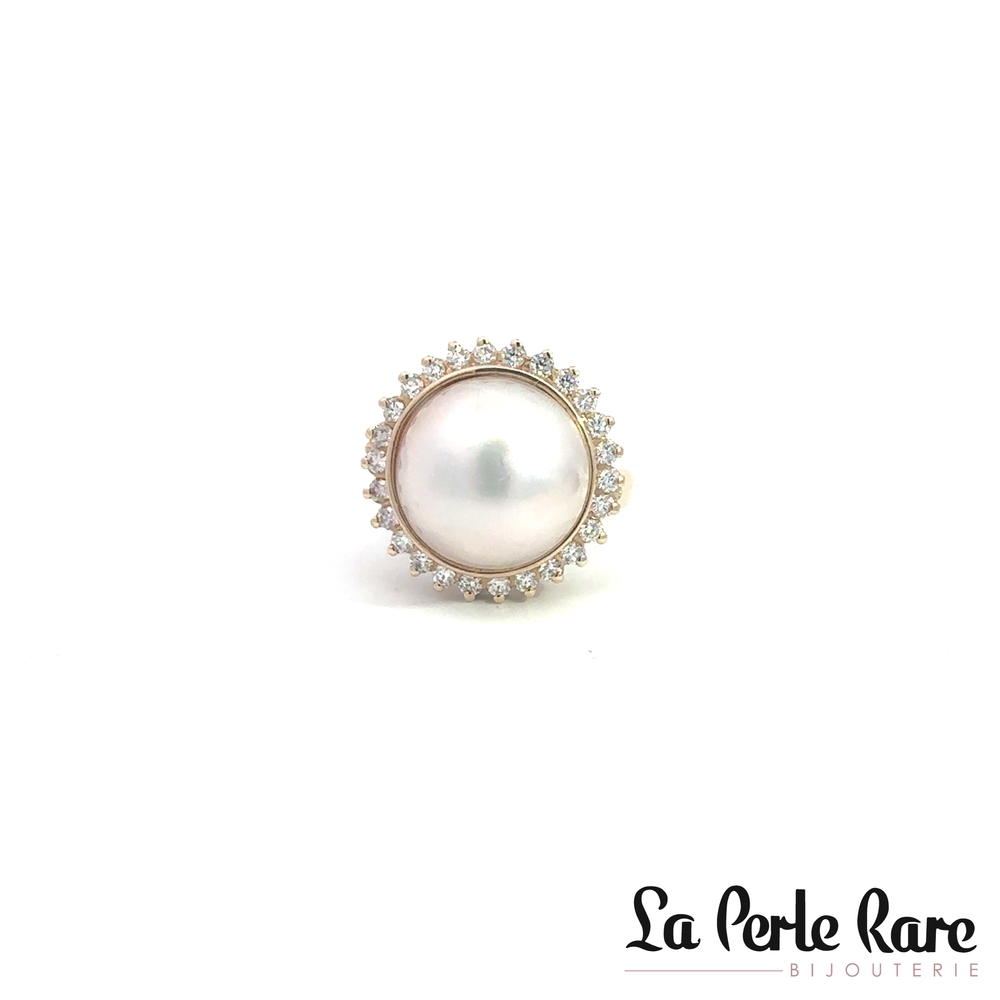
Creations from this era are imbued with romance, featuring floral motifs and symbolic elements such as the serpent, representing eternity. Rings were often set with pearls, and yellow and rose gold were favored for their warmth under candlelight.
Diamonds were cut using traditional techniques like the Old Mine Cut. These hand-cut stones resemble a cushion shape, with less symmetrical facets. At the time, brilliance in candlelight was preferred over the pursuit of flawless, colorless stones. Settings often featured halo or cluster (daisy-style) designs.
The Edwardian Era: Finesse and Refinement
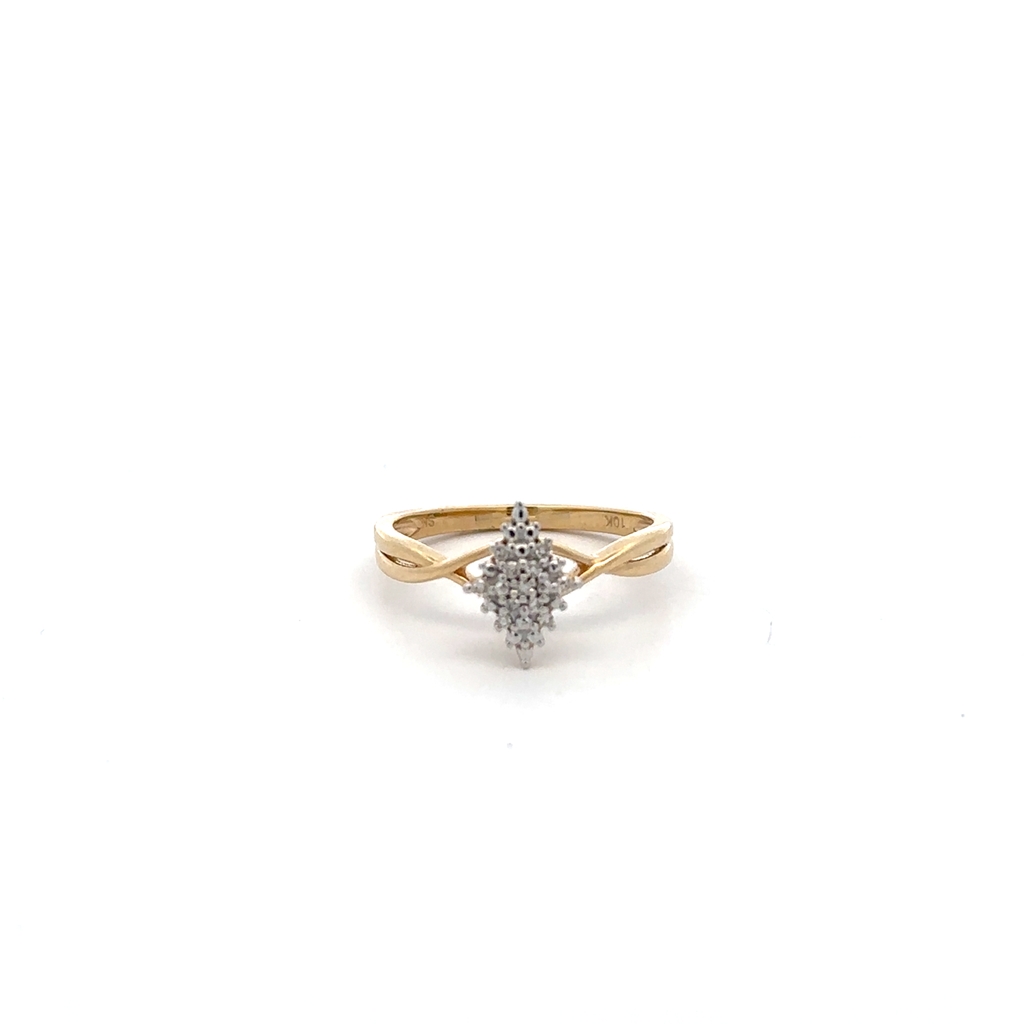
At the beginning of the 20th century, styles evolved toward lightness and sophistication. Platinum became the metal of choice, allowing for delicate and finely crafted settings.
Rings adopted elongated, airy lines, often inspired by nature. Intricate details reminiscent of lace created an aesthetic of remarkable elegance.
The Art Deco Years: Modernity and Geometry
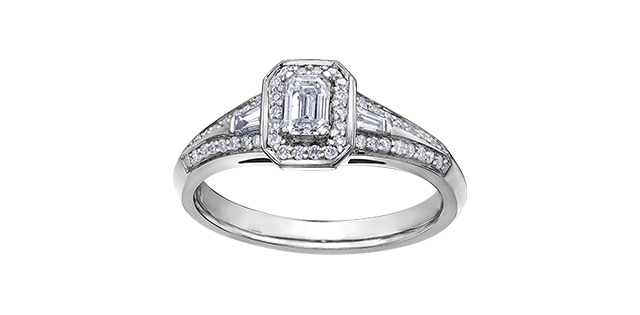
The 1920s marked a stylistic shift. Influenced by the Art Deco movement, engagement rings embraced clean, geometric, and symmetrical lines.
The emerald cut became increasingly refined and iconic, highlighting the clarity and structure of the diamond. The aesthetic grew more architectural, almost sculptural.
However, the economic crisis of 1929 slowed this momentum. Designs became more understated, with the four-prong solitaire, often set in white gold, emerging as a dominant style.
The 1940s and 1950s: Between Resilience and Glamour
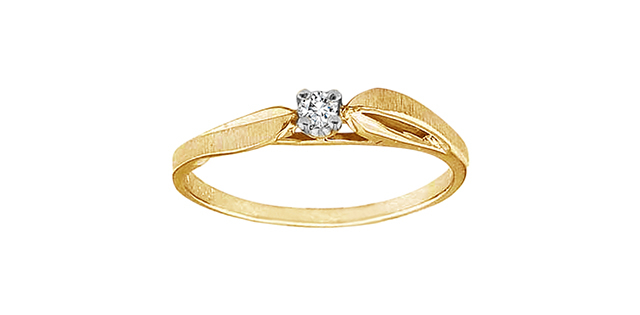
During World War II, access to precious metals was limited. Jewelers showed ingenuity, working with yellow and rose gold to create designs inspired by fashion—bows, ribbons, and draped motifs.
After the war, renewed prosperity was reflected in jewelry. Center stones became more prominent, designs more refined, and Hollywood influences more pronounced. Figures such as Grace Kelly and Audrey Hepburn helped define an ideal of elegance.
Marquise and round brilliant cuts rose in popularity during this time.
The 1960s to 1980s: Boldness and Personal Expression
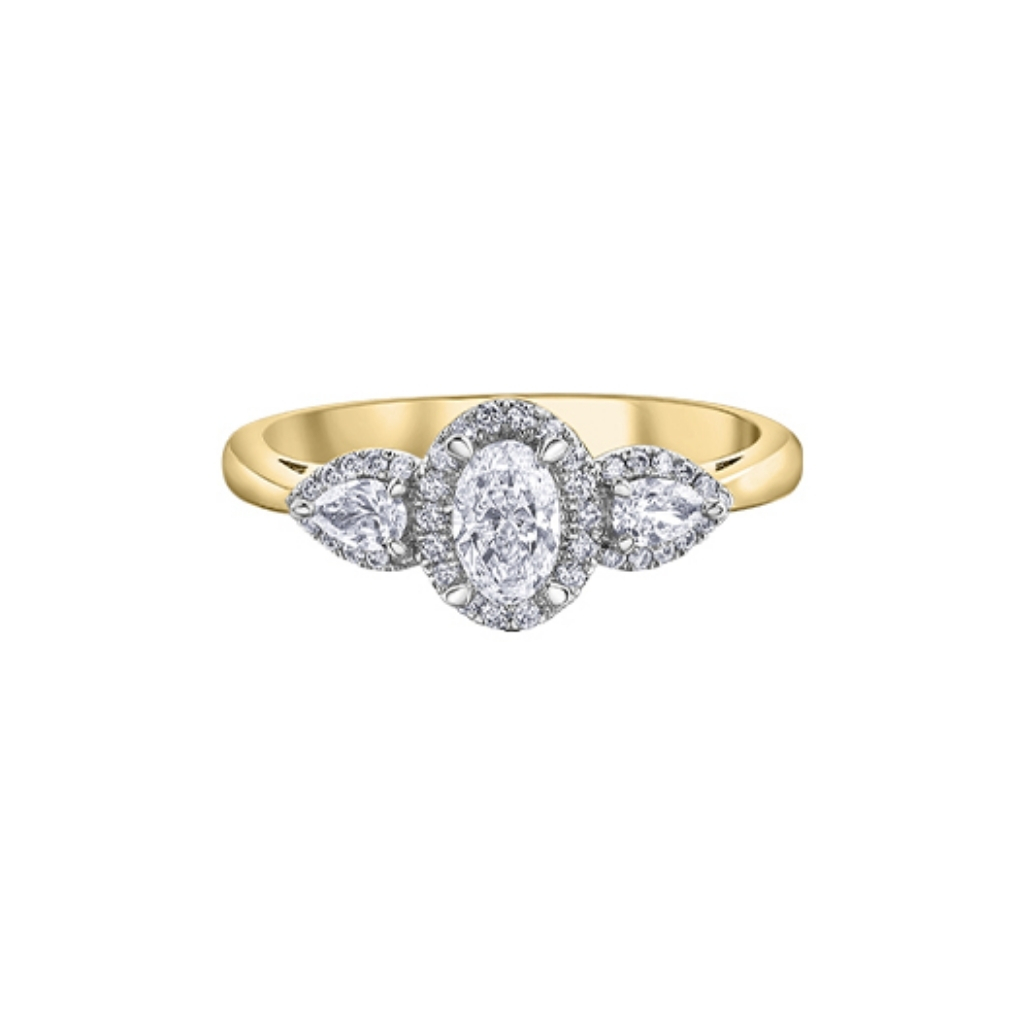
In the following decades, individuality took center stage. Rings became larger, bolder, sometimes asymmetrical. Yellow gold returned, colored gemstones gained popularity, and pear and oval shapes stood out for their originality.
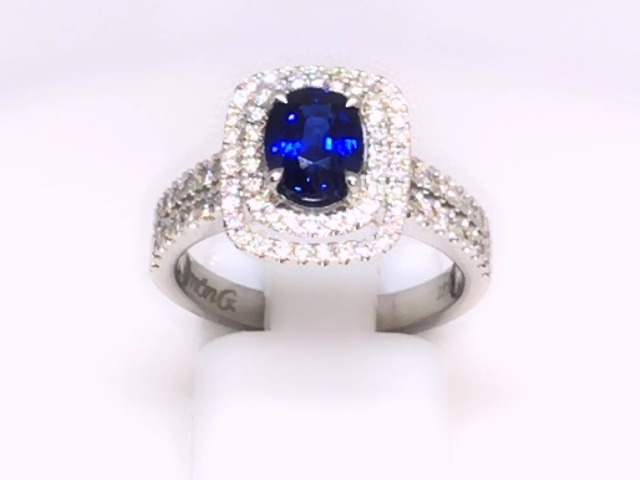
In the 1980s, as maximalism reached its peak, the iconic ring of Lady Diana, with its sapphire surrounded by diamonds, perfectly embodied the era’s taste for statement pieces.
The 1990s: A Return to Simplicity
After excess came restraint. The 1990s marked a return to simplicity, with cleaner lines, smaller volumes, and a more understated elegance.
The classic six-prong solitaire, inspired by Tiffany style, regained popularity. Princess-cut diamonds and channel settings also became key elements of this minimalist trend.
The 2000s–2010s: Personalization and Self-Expression
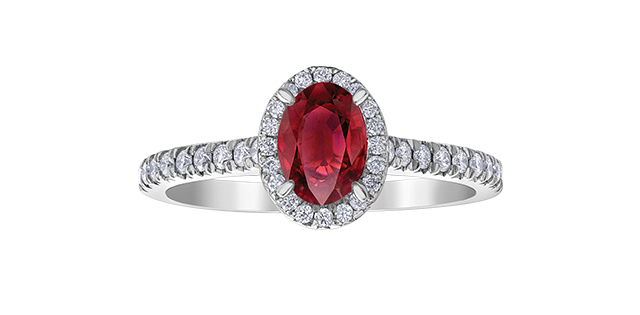
In the early 2000s, engagement rings returned to a more opulent aesthetic, heavily influenced by celebrities. Large center stones, halo settings, and pavé bands dominated, often crafted in white gold or platinum.
From the 2010s onward, social media reshaped trends. Couples increasingly sought unique designs inspired by vintage styles. Asscher, emerald, and oval cuts regained popularity, alongside colored diamonds and unconventional gemstones.
The 2020s: Authenticity and Individuality
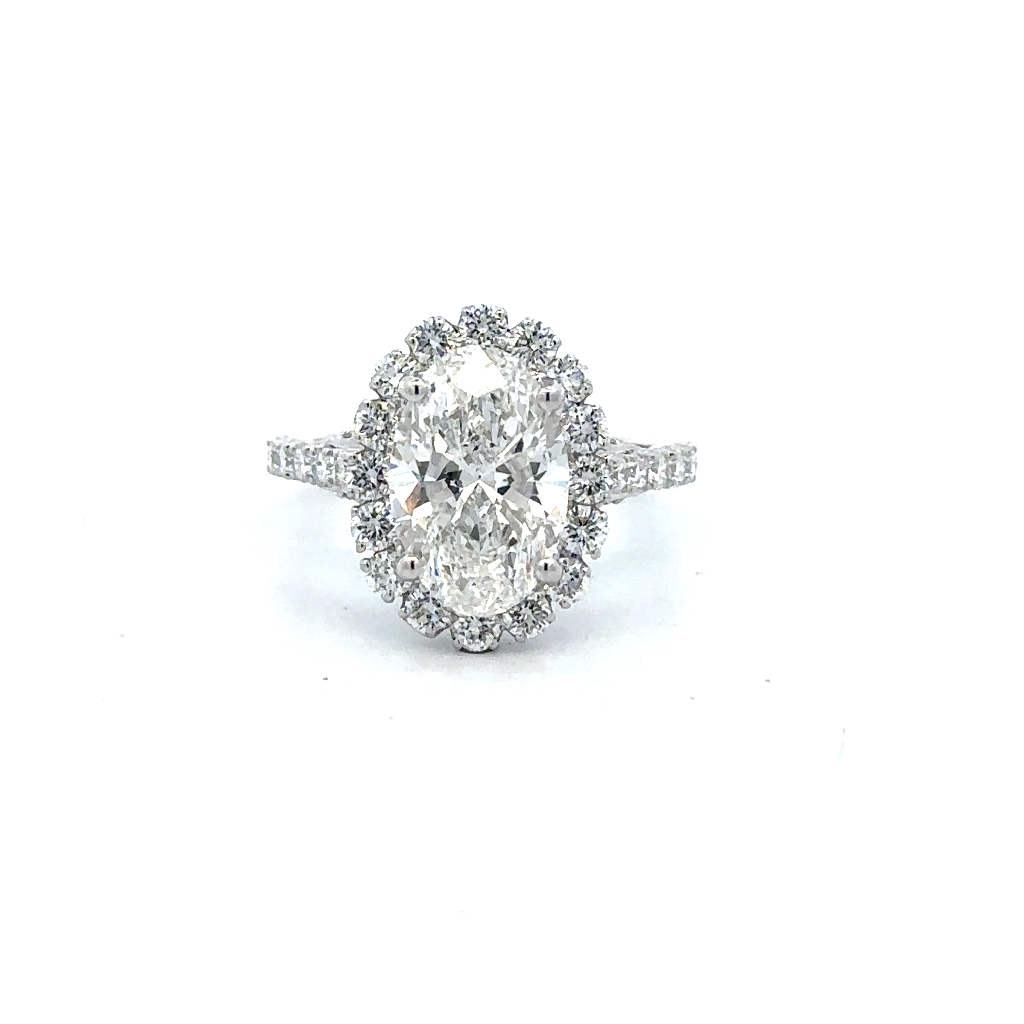
Today, choices are guided by a desire for authenticity and personal expression. Custom-made designs take center stage, often inspired by antique cuts such as Old Mine or Old European.
Elongated shapes like oval and marquise are especially sought after, as are colored stones that reinterpret traditional codes. More than ever, the ring reflects a unique story.
What History Teaches Us
Styles change. Trends evolve. Some designs disappear, only to return again. Yet throughout time, the engagement ring has carried the same intention: to offer a meaningful symbol to the one you love.
For decades, we have had the privilege of being part of these meaningful moments, and we look forward to continuing to guide you in choosing a piece that will endure with the same elegance as your story.
Sources: Only naturals diamonds, Brilliant Earth, Wikipedia